Does Gamification Actually Build Resilience? A Learning Science Audit of SuperBetter
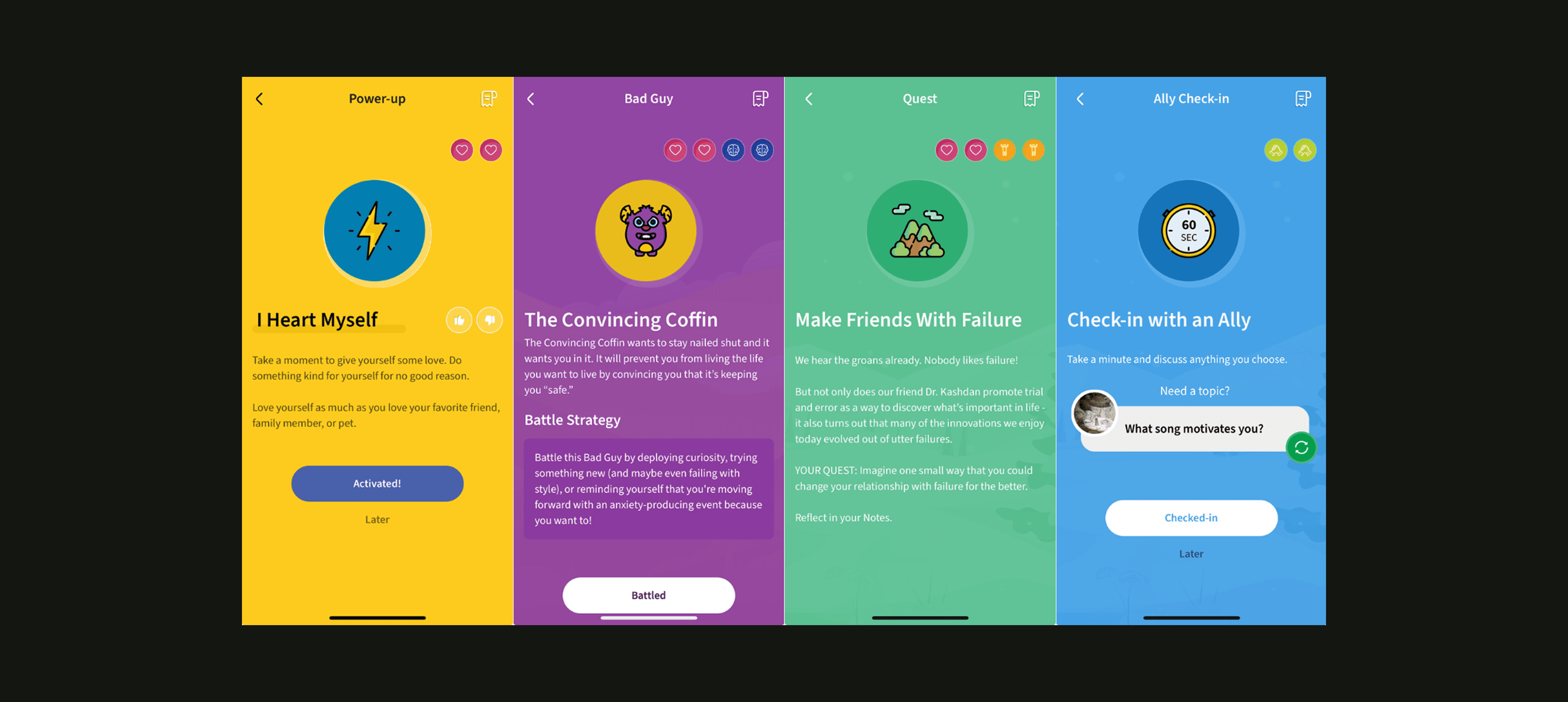
SuperBetter has a TED Talk, a book, and hundreds of thousands of users. Its premise: reframe real-life challenges as a game. Earn Power-Ups, fight Bad Guys, complete Quests. Build resilience the way you'd grind a RPG.
As someone trained in learning science, I wanted to stress-test that claim. Not whether the app is engaging — it clearly is — but whether engagement is doing what the designers say it does.
The Framework
Learning science gives us three questions worth asking about any educational system:
Does it produce transfer — can users apply what they practice to situations the system didn't anticipate?
Does it use desirable difficulty — the right amount of challenge to promote retention without triggering dropout?
Does it build intrinsic motivation or replace it with extrinsic reward?
SuperBetter scores unevenly across all three.
Where It Works
The Quest structure is genuinely well-designed. Breaking overwhelming goals into small, completable units reduces cognitive overload and creates momentum — this is consistent with how we understand goal-setting in motivational psychology. The 7-week resilience model also has empirical backing; the original study by McGonigal et al. showed measurable improvements in mood and symptom severity.
The reframing mechanic — naming anxiety a "Bad Guy," naming healthy habits "Power-Ups" — is a legitimate cognitive tool. Externalization reduces the identity threat of self-improvement. You're not a person who struggles with anxiety; you're a hero fighting a named enemy. That's not trivial.
Where It Breaks
The point system works against long-term learning. Points are awarded for completion, not quality. Users quickly learn to game the system — checking off quests without the behavioral change the quest was designed to create. This is the core failure mode of extrinsic reward: it substitutes for the intrinsic motivation it was supposed to build.
Transfer is also largely unaddressed. SuperBetter teaches users to reframe within the app's vocabulary. Whether that reframing generalizes to situations outside the game framework is left to the user to figure out. There's no scaffolding for that transition.
The Design Lesson
SuperBetter is a well-intentioned system that partially works. Its strongest features — structured questing, cognitive reframing, social accountability — are grounded in real research. Its weakest — points, badges, completion streaks — are gamification clichés that undermine the deeper mechanisms.
The lesson for product designers: engagement mechanics and learning mechanics are not the same thing. A system can be highly engaging while producing no durable change. The question worth asking before adding any reward loop is: what behavior does this actually reinforce, and is that the behavior we want?
SuperBetter has a TED Talk, a book, and hundreds of thousands of users. Its premise: reframe real-life challenges as a game. Earn Power-Ups, fight Bad Guys, complete Quests. Build resilience the way you'd grind a RPG.
As someone trained in learning science, I wanted to stress-test that claim. Not whether the app is engaging — it clearly is — but whether engagement is doing what the designers say it does.
The Framework
Learning science gives us three questions worth asking about any educational system:
Does it produce transfer — can users apply what they practice to situations the system didn't anticipate?
Does it use desirable difficulty — the right amount of challenge to promote retention without triggering dropout?
Does it build intrinsic motivation or replace it with extrinsic reward?
SuperBetter scores unevenly across all three.
Where It Works
The Quest structure is genuinely well-designed. Breaking overwhelming goals into small, completable units reduces cognitive overload and creates momentum — this is consistent with how we understand goal-setting in motivational psychology. The 7-week resilience model also has empirical backing; the original study by McGonigal et al. showed measurable improvements in mood and symptom severity.
The reframing mechanic — naming anxiety a "Bad Guy," naming healthy habits "Power-Ups" — is a legitimate cognitive tool. Externalization reduces the identity threat of self-improvement. You're not a person who struggles with anxiety; you're a hero fighting a named enemy. That's not trivial.
Where It Breaks
The point system works against long-term learning. Points are awarded for completion, not quality. Users quickly learn to game the system — checking off quests without the behavioral change the quest was designed to create. This is the core failure mode of extrinsic reward: it substitutes for the intrinsic motivation it was supposed to build.
Transfer is also largely unaddressed. SuperBetter teaches users to reframe within the app's vocabulary. Whether that reframing generalizes to situations outside the game framework is left to the user to figure out. There's no scaffolding for that transition.
The Design Lesson
SuperBetter is a well-intentioned system that partially works. Its strongest features — structured questing, cognitive reframing, social accountability — are grounded in real research. Its weakest — points, badges, completion streaks — are gamification clichés that undermine the deeper mechanisms.
The lesson for product designers: engagement mechanics and learning mechanics are not the same thing. A system can be highly engaging while producing no durable change. The question worth asking before adding any reward loop is: what behavior does this actually reinforce, and is that the behavior we want?