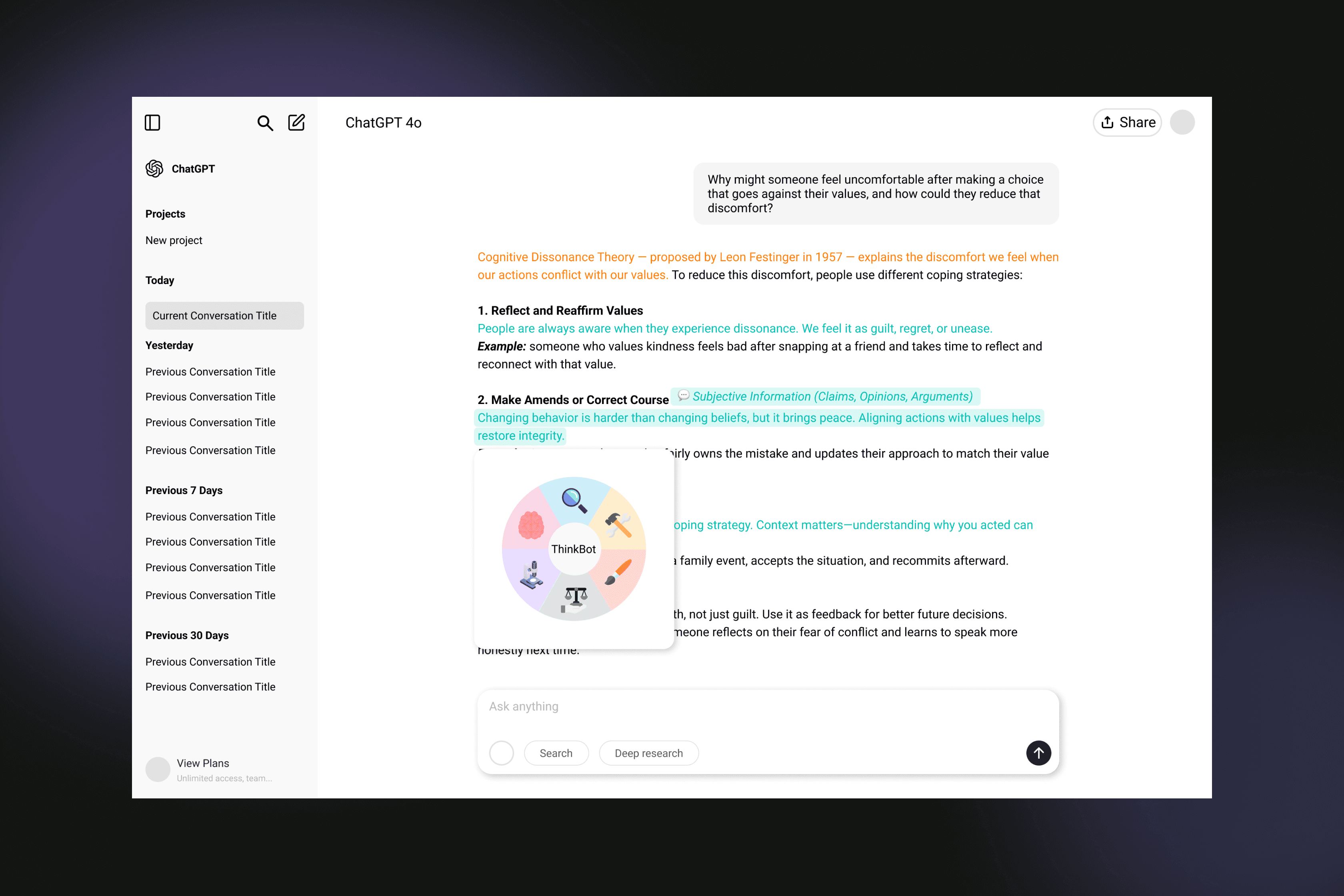
When AI Support Becomes Friction: A LingoBuddy Design Postmortem
We built a tool to help international students navigate slang and cultural subtext. We gave them sliders — for tone, relationship type, formality, sarcasm level. Four dimensions of control, because more control means better support, right?
Testing said otherwise. Users were spending more mental energy adjusting the interface than actually learning anything. They weren't practicing social confidence. They were debugging a panel.
That was the moment I understood something I now apply to every AI product I design: the interface that absorbs complexity is always more powerful than the one that delegates it.
The Micromanagement Trap
In our mid-fi prototype, every message came with a Fine-tuning drawer. Relationship type. Tone sliders. Emoji toggle. Regenerate button. It looked thorough. It felt exhausting.
Users described feeling like "linguistic engineers." They were so focused on calibrating the output that the actual goal — learning to respond naturally in a conversation — disappeared entirely. We had designed support that felt like homework.
Three issues surfaced from testing:
The sliders optimized for precision, but users wanted safety. They didn't need to control every axis of tone — they needed to feel confident that whatever came out wouldn't embarrass them socially. Those are very different problems.
Slang was invisible. Terms appeared inside AI-generated replies, but with no visual separation, users were copying responses without registering what they were actually learning. Usage without retention.
Every message required re-tuning. There was no persistent state. Each conversation reset the cognitive load from zero.
The Pivot: From Tuning to Intending
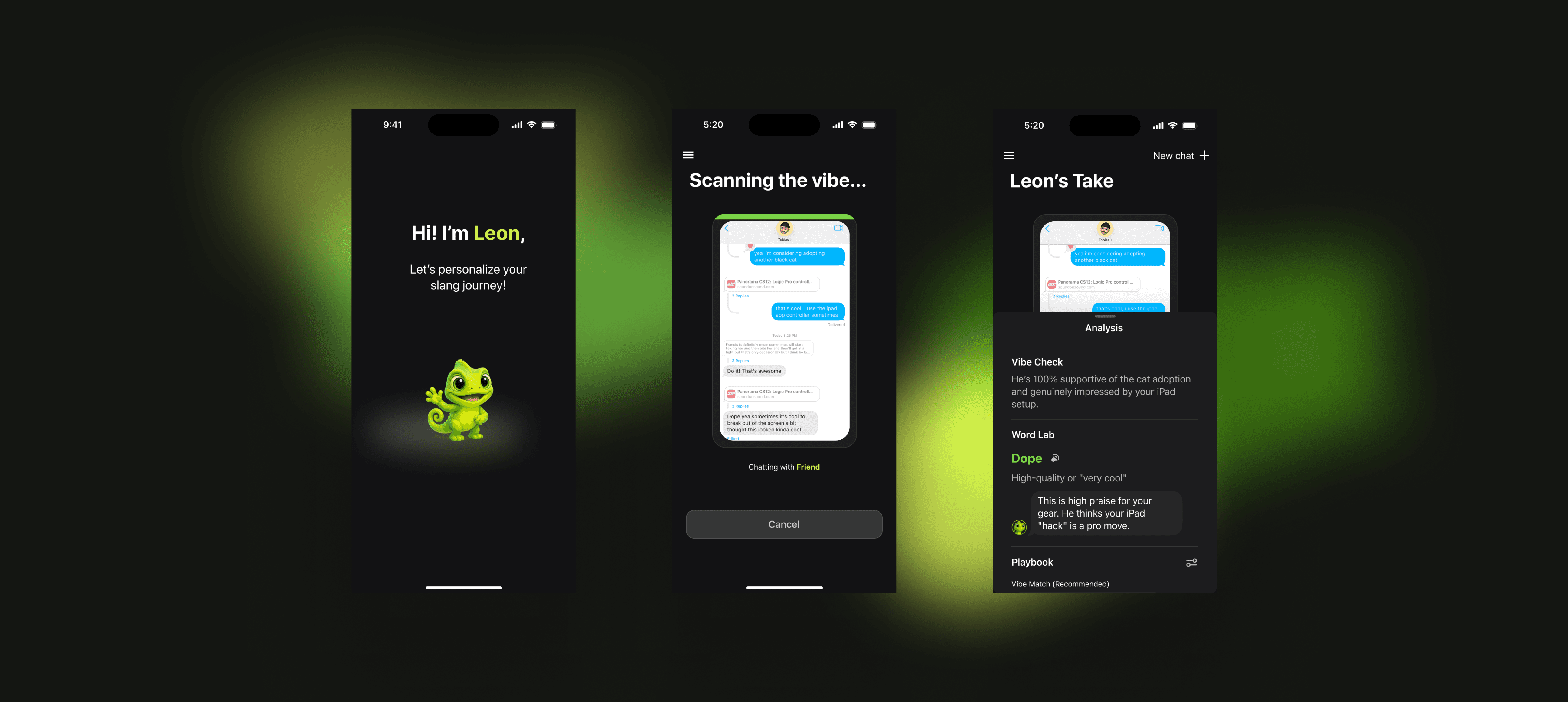
I replaced the Fine-tuning drawer with a single upfront question: who are you chatting with? Friend. Work. Dating. Formal.
Four words. No sliders. The AI handles the rest.
This shifted the design contract entirely. Instead of asking users to specify how they wanted to sound, we asked them why they were in this conversation. Intent is something users always know. Optimal tone parameters are not.
The screenshot-first input model extended this logic. Rather than asking users to retype a confusing message into a text box, Leon scans the actual chat. Memes, emojis, message threading, cultural subtext — all captured in one tap. The tool sees what the user sees.
The Principle
AI products fail when they make users responsible for managing the AI's limitations. Sliders, prompt engineering, parameter tuning — these are engineer problems dressed up as user features.
The better design question isn't how do we give users more control? It's what does the user actually need to provide, and what should the system figure out on its own?
In LingoBuddy's case, the answer was intent. Everything else was ours to solve.
We built a tool to help international students navigate slang and cultural subtext. We gave them sliders — for tone, relationship type, formality, sarcasm level. Four dimensions of control, because more control means better support, right?
Testing said otherwise. Users were spending more mental energy adjusting the interface than actually learning anything. They weren't practicing social confidence. They were debugging a panel.
That was the moment I understood something I now apply to every AI product I design: the interface that absorbs complexity is always more powerful than the one that delegates it.
The Micromanagement Trap
In our mid-fi prototype, every message came with a Fine-tuning drawer. Relationship type. Tone sliders. Emoji toggle. Regenerate button. It looked thorough. It felt exhausting.
Users described feeling like "linguistic engineers." They were so focused on calibrating the output that the actual goal — learning to respond naturally in a conversation — disappeared entirely. We had designed support that felt like homework.
Three issues surfaced from testing:
The sliders optimized for precision, but users wanted safety. They didn't need to control every axis of tone — they needed to feel confident that whatever came out wouldn't embarrass them socially. Those are very different problems.
Slang was invisible. Terms appeared inside AI-generated replies, but with no visual separation, users were copying responses without registering what they were actually learning. Usage without retention.
Every message required re-tuning. There was no persistent state. Each conversation reset the cognitive load from zero.
The Pivot: From Tuning to Intending
I replaced the Fine-tuning drawer with a single upfront question: who are you chatting with? Friend. Work. Dating. Formal.
Four words. No sliders. The AI handles the rest.
This shifted the design contract entirely. Instead of asking users to specify how they wanted to sound, we asked them why they were in this conversation. Intent is something users always know. Optimal tone parameters are not.
The screenshot-first input model extended this logic. Rather than asking users to retype a confusing message into a text box, Leon scans the actual chat. Memes, emojis, message threading, cultural subtext — all captured in one tap. The tool sees what the user sees.
The Principle
AI products fail when they make users responsible for managing the AI's limitations. Sliders, prompt engineering, parameter tuning — these are engineer problems dressed up as user features.
The better design question isn't how do we give users more control? It's what does the user actually need to provide, and what should the system figure out on its own?
In LingoBuddy's case, the answer was intent. Everything else was ours to solve.